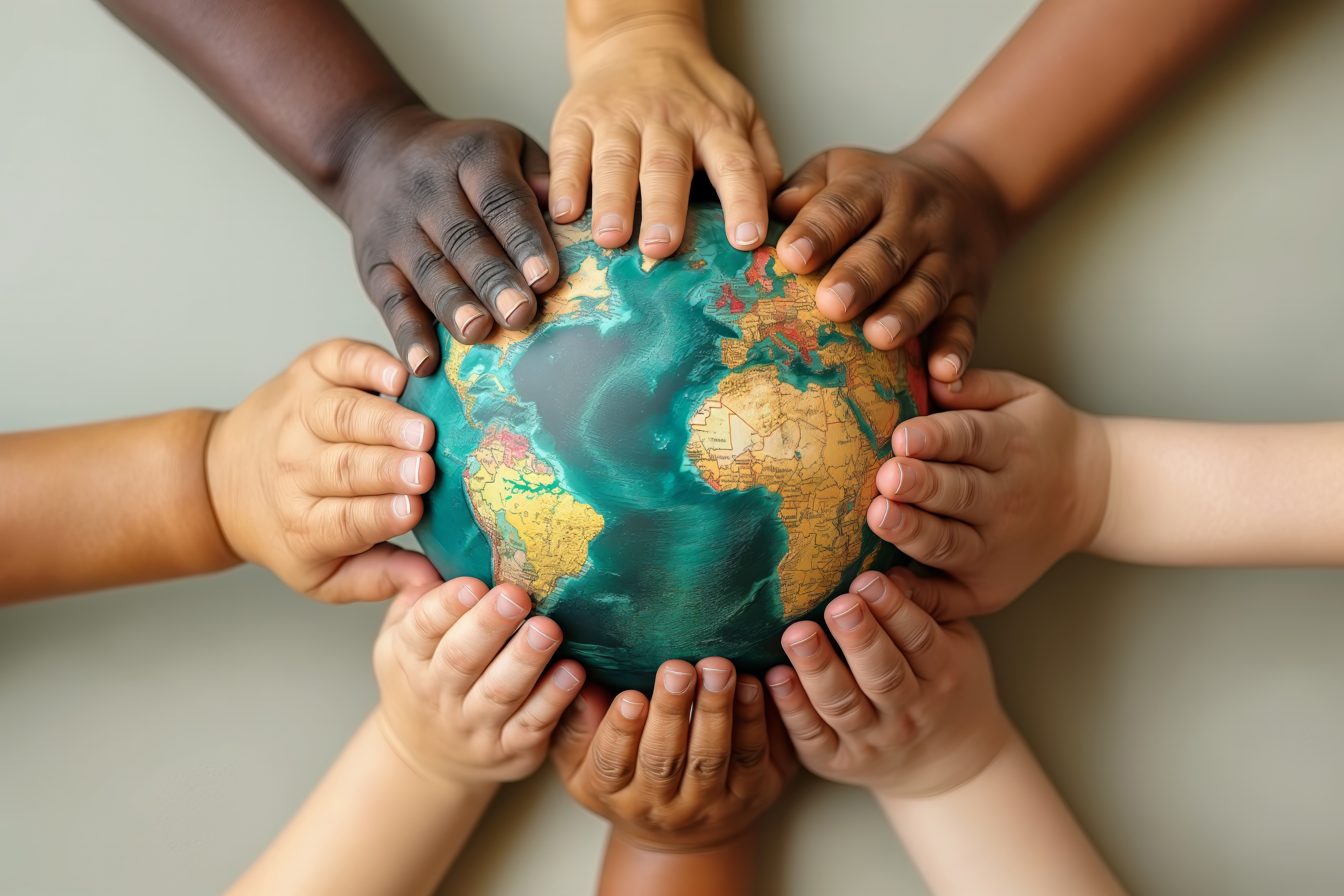
World Children’s Day: Protecting Children’s Rights and Securing Their Future
Every child is a gift from God, a bearer of human dignity, and a trust placed in the care of families and society. Yet millions of children around the world face poverty, violence, displacement, and uncertainty about their future.
World Children’s Day, observed annually on November 20, reminds us of our collective responsibility toward children. The United Nations recommended establishing Universal Children’s Day in 1954, while November 20 marks the adoption of the Declaration of the Rights of the Child in 1959 and the Convention on the Rights of the Child in 1989.
According to UNICEF’s State of the World’s Children 2025, approximately 412 million children live in extreme monetary poverty. In 2024, approximately 19 percent of the world’s children lived in areas affected by armed conflict. These realities call for renewed moral commitment and collective action.
Children as Divine Gifts and Bearers of Rights
The Quran describes children as gifts from God, “He grants daughters to whom He wills and grants sons to whom He wills” (42:49).The word hiba (gift) reminds us that children are blessings to be cherished, not possessions to be controlled. The mention of daughters before sons also challenges attitudes that diminish the dignity of girls.
The Quran further declares, “Do not kill your children for fear of poverty. We provide for them and for you. Surely killing them is a grave sin” (17:31). This categorical prohibition establishes a fundamental moral principle: economic hardship can never justify taking a child’s life.
In his Treatise on Rights, Imam Zayn al-‘Abidin (p) emphasizes the responsibilities of parenthood, “You are responsible for what has been entrusted to you, including educating your child in good conduct, guiding them toward their Lord, and helping them to obey Him” (Shaykh al-Saduq, Man la yahduruh al-faqih, vol. 2, p. 622; Risalat al-huquq, “The Right of the Child”).
Parenthood is thus not merely an exercise of authority but a moral responsibility involving care, guidance, and accountability.
The Quranic affirmation of human dignity provides a broader foundation for children’s rights: “We have certainly honored the children of Adam” (17:70).
This affirmation encompasses every child, regardless of gender, ethnicity, religion, or social background. Children’s rights are therefore not merely expressions of parental kindness or generosity; they reflect obligations grounded in human dignity, justice, and accountability before God.
These values resonate with the principles of the UN Convention on the Rights of the Child, particularly non-discrimination, the best interests of the child, and the rights to life, survival, and development. Although Islamic teachings and international human rights law arise from distinct normative frameworks, both provide important grounds for protecting children against neglect, discrimination, violence, and exploitation.
Love, Play, and Respect for Childhood
Children need more than food and physical protection. They also need affection, emotional security, opportunities to play, education, and guidance appropriate to their developmental stages. Imam Jafar al-Sadiq (p) is reported to have said, “A child plays for seven years, learns the Book for seven years, and learns what is lawful and unlawful for seven years” (Al-Kulayni, Al-kafi, vol. 6, p. 47, hadith 3). This narration highlights the importance of age-appropriate upbringing. Play is not merely a distraction from education; it contributes to children’s emotional, social, and intellectual development.
Respecting childhood also means protecting children from fear, humiliation, and pressures that deprive them of the freedom to grow and flourish. Any circumstances that rob children of their childhood, whether war, armed conflict, forced displacement, poverty, or other forms of deprivation, are morally unacceptable and indefensible from both Islamic and human rights perspectives. Every child has the right to experience childhood, not merely to survive it.
Protecting Children Today and Securing Their Tomorrow
Protecting children today means safeguarding them from violence, hunger, exploitation, discrimination, and neglect. Securing their future means preserving the environmental, social, and economic conditions they will need to live with dignity. Armed conflicts, poverty, environmental destruction, and emerging technological risks threaten both dimensions of security.
The Quran reminds us, “Do not spread corruption on the earth after it has been set in order” (7:56). This teaching encourages responsibility toward the environment and the generations that will inherit it.
On World Children’s Day, I.M.A.M. calls upon religious leaders to promote children’s rights through sermons, education, and community initiatives; policymakers to prioritize children’s protection, education, healthcare, and well-being; parents and educators to respect children’s voices and developmental needs; and civil society organizations to strengthen cooperation in supporting vulnerable children. We also urge governments and other decision-makers to address environmental and technological risks and consider the long-term consequences of their decisions for future generations.
Guided by the Quran and the teachings of the Ahl al-Bayt (pbut), I.M.A.M. is committed to advancing human dignity, justice, and compassion through education, advocacy, and cooperation with faith communities, civil society, and international institutions.
Honoring children as gifts from God requires more than affection and good intentions. It demands meaningful action to protect their rights today and ensure that every child inherits a safer, more just, and sustainable world.